Gnosis Defense · available now
Some knowledge is worth defending.
An occult tower-defense game. A secret order. A library that would prefer to remain unread.
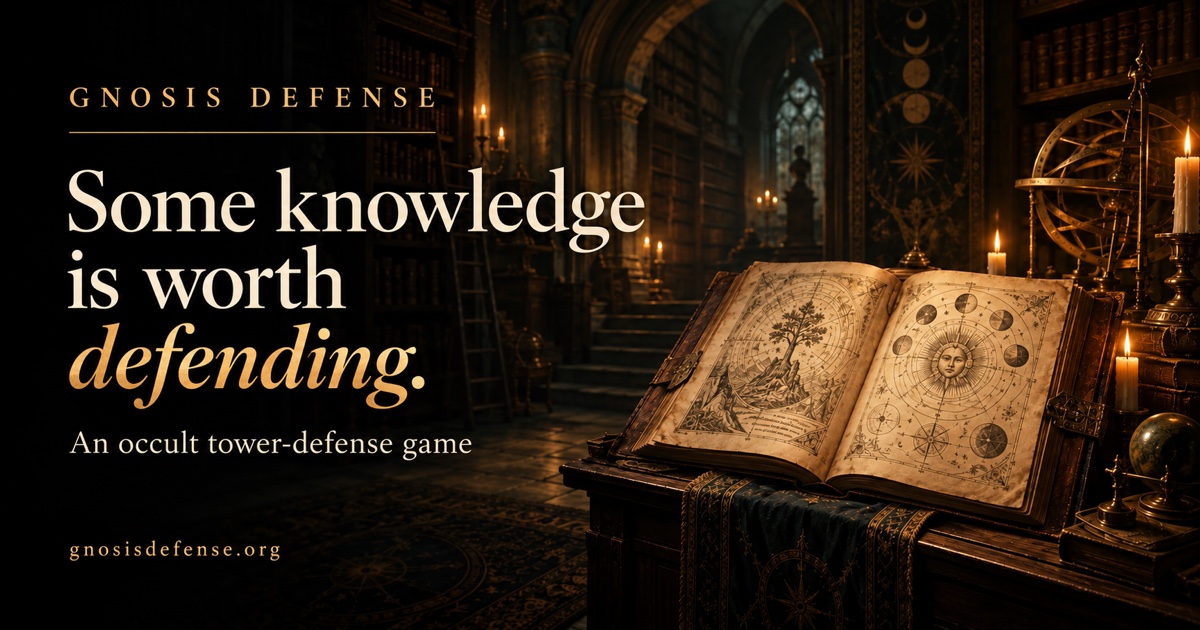
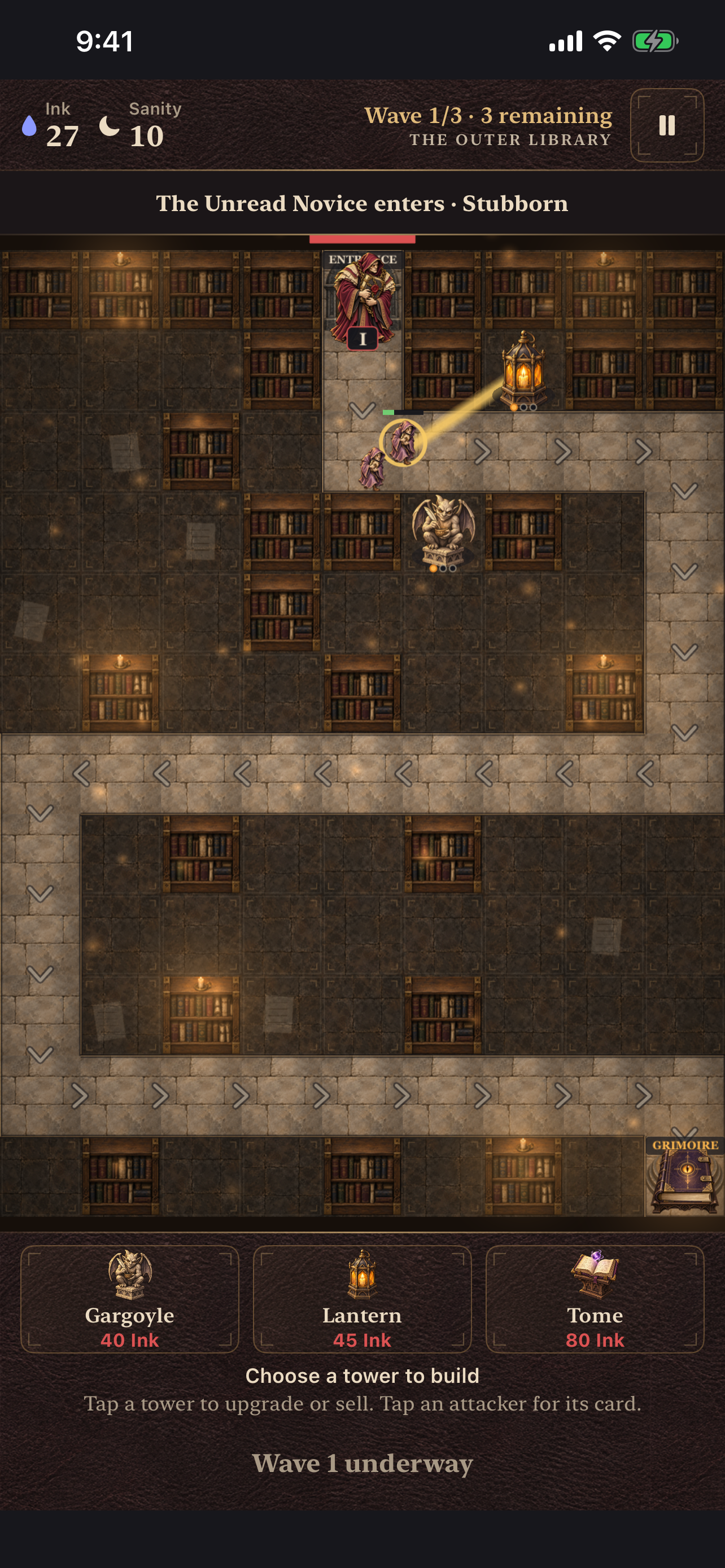
Defend the Grimoire with gargoyles, lanterns, and dangerous books. Seven trials and 93 waves lead deeper into the Order of the Closed Book, with a boss at the end of every wave and a few inconvenient truths along the way.

Behind the game
An interest that got out of hand.
Gnosis Defense began with Greg’s interest in esoteric books and the podcasts that discuss them. What if a game could be fun for someone who knew nothing about the subject, while giving an occult-curious player a few interesting ideas and books to follow?
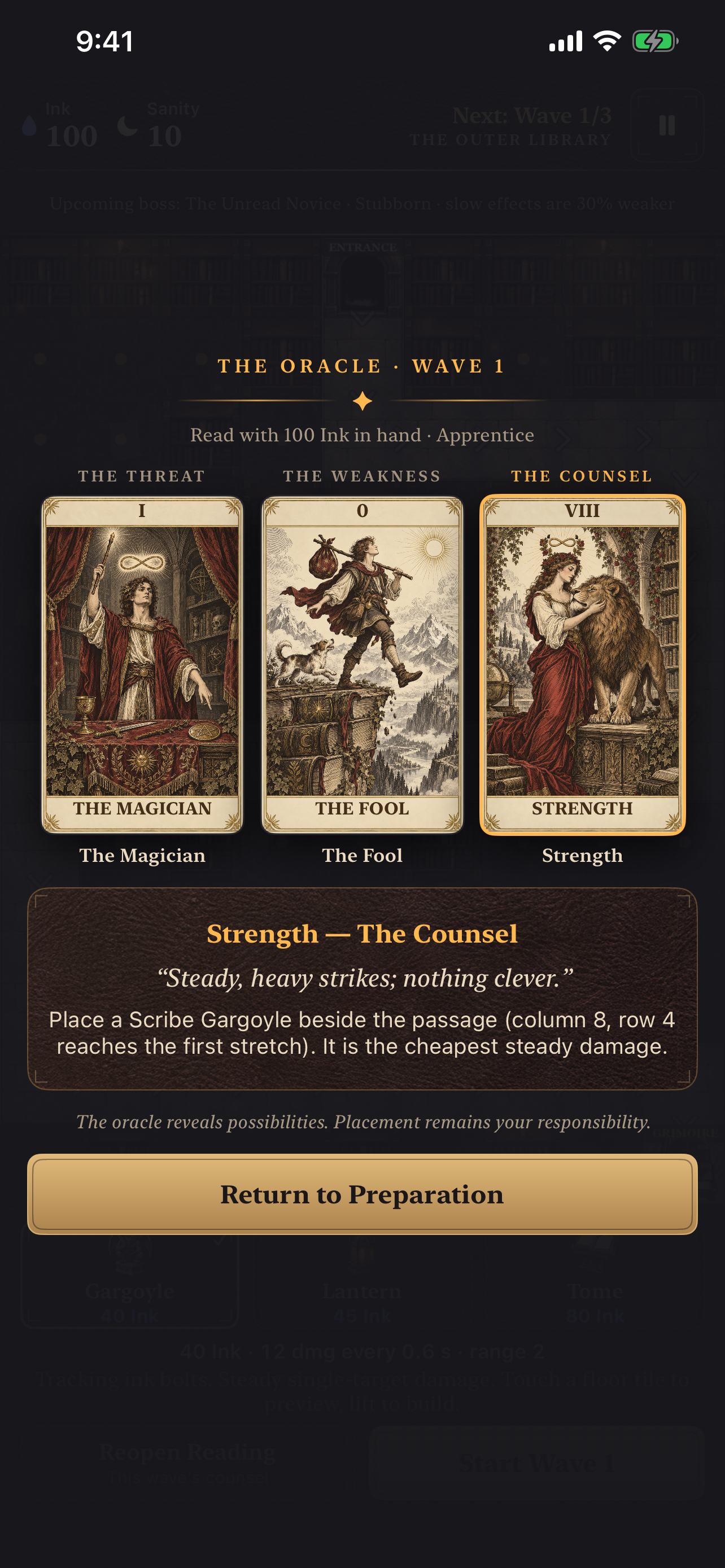
The first playable game took shape over a weekend. Testing, balance, artwork, music, and release work followed. The result is a game with three upgradeable guardian types, enemies that can strike back, optional tarot counsel, and a progression through a fictional order.
The seven maps have 3, 7, 11, 13, 17, 19, and 23 waves. That adds up to 93. That was an accident.
A game, with a reading habit.
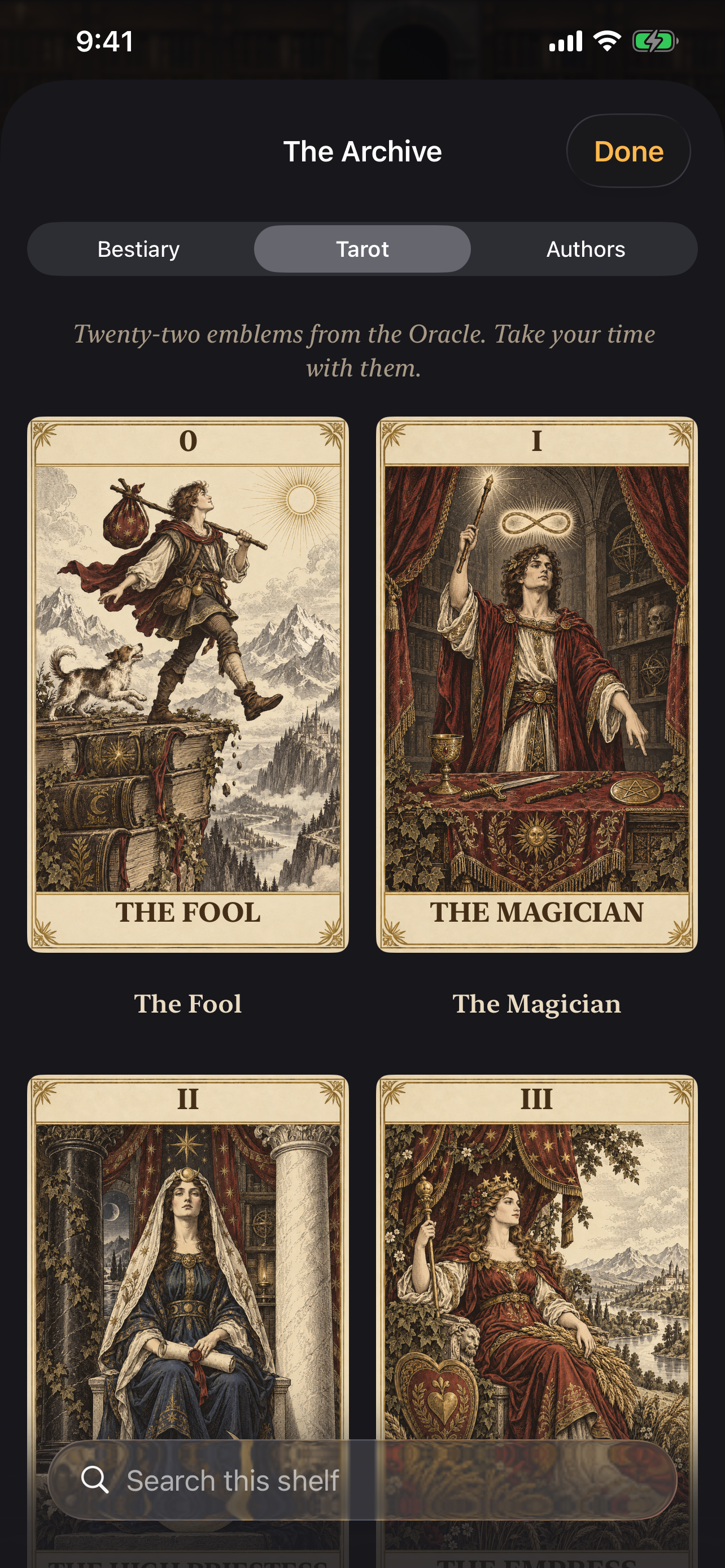
The iPhone edition includes the tactical Oracle, an illustrated tarot collection, adversary stories, and historical author cards. These are actual iPhone screenshots. The free browser demo contains the first two maps; the Oracle and five later maps are part of the iPhone edition.
Follow the ideas back to the books.
The online Reading Room collects the historical readings and their sources, author biographies, the illustrated tarot, and the game’s adversaries. It is open to everyone. You do not need to buy the game to explore it.
The Order is fictional. The curiosity is real.
Enter the library
Start with two free maps in your browser or on iPhone. One US $2.99 purchase permanently unlocks the remaining five maps on iPhone. No accounts, ads, or subscriptions. Browser and iPhone progress are separate.
How it was made
Gnosis Defense was built with AI assistance, including code, illustrations, and music. Greg directed the design and tested and refined the game. The illustrations draw on antique engraving; historical passages cite their sources, and historical portraits carry individual credits in the Reading Room.